
📝 Publications
A full publication list is available on my Google Scholar page.
Publications
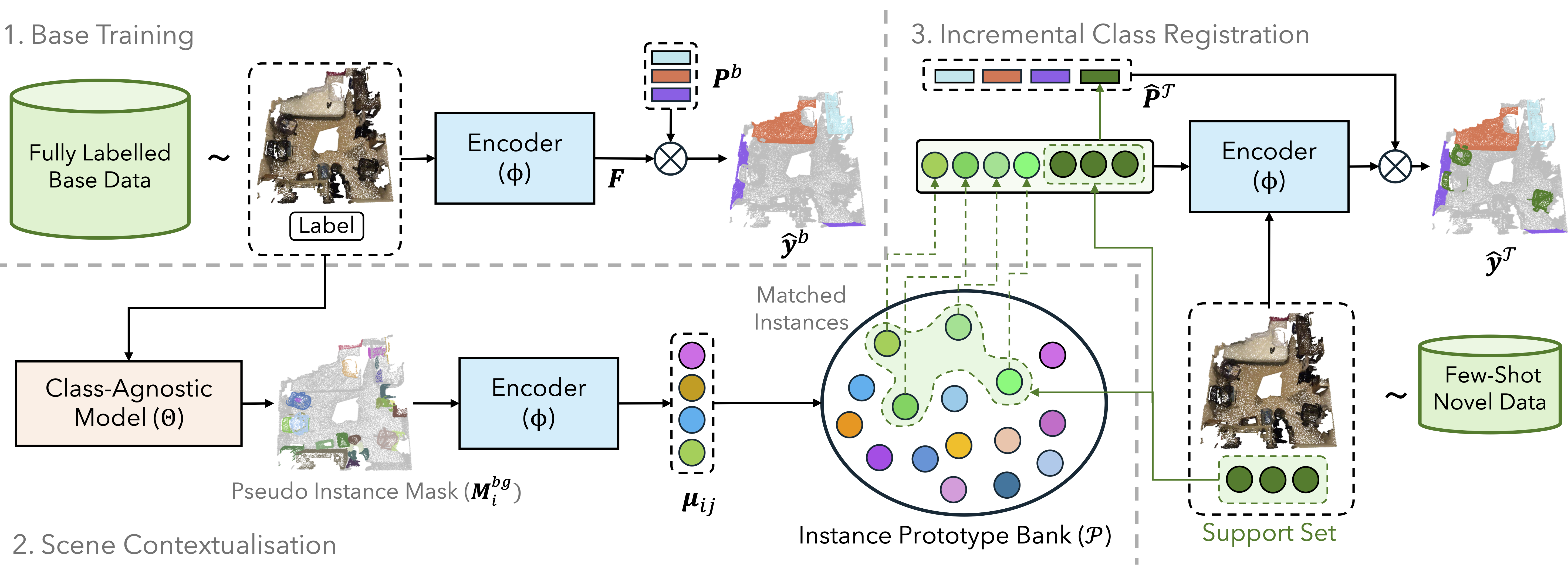
SCOPE: Scene-Contextualised Incremental Few-Shot 3D Segmentation
A framework that utilises background context to recognise novel classes in a sequential manner, without additional fine-tuning or introducing new parameters.
 ArXiv
ArXiv
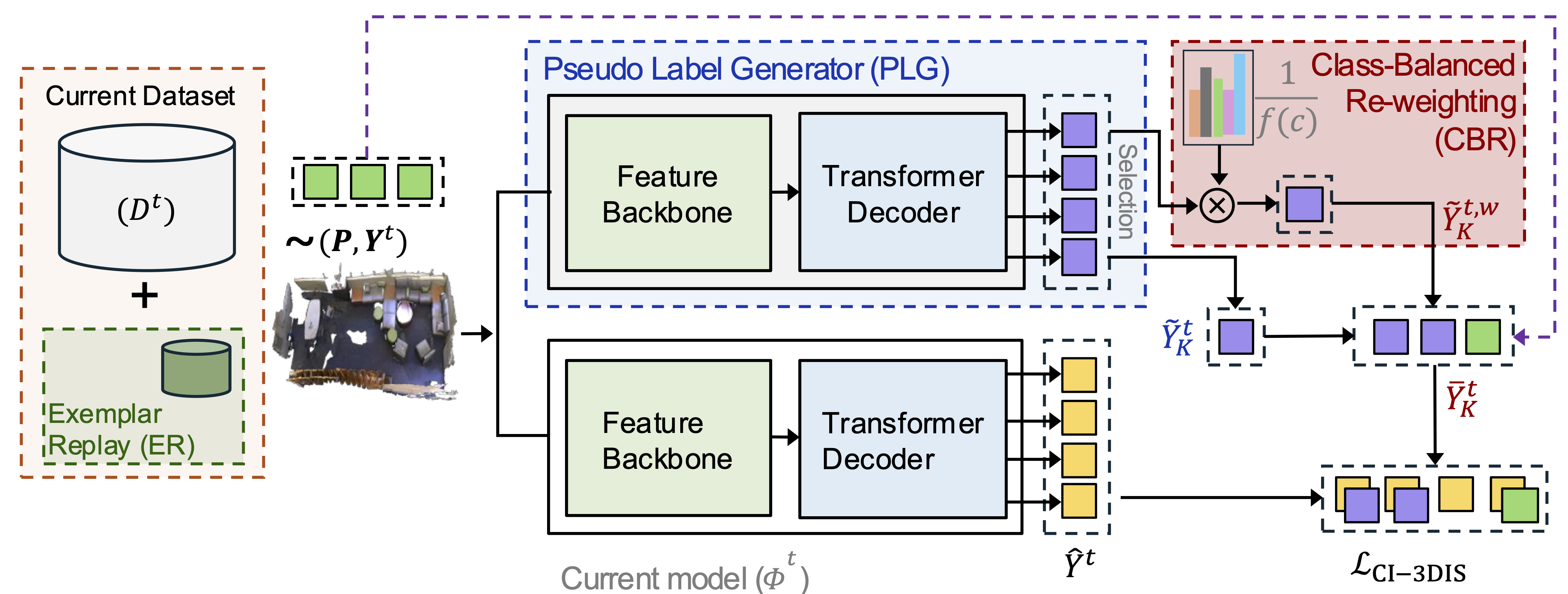
CLIMB-3D: Continual Learning for Imbalanced 3D Instance Segmentation
We introduce class-incremental learning for point cloud instance segmentation, with benchmarks from the long-tail ScanNet200 dataset. We also propose a module to address class imbalance and improve performance across frequent and rare classes..
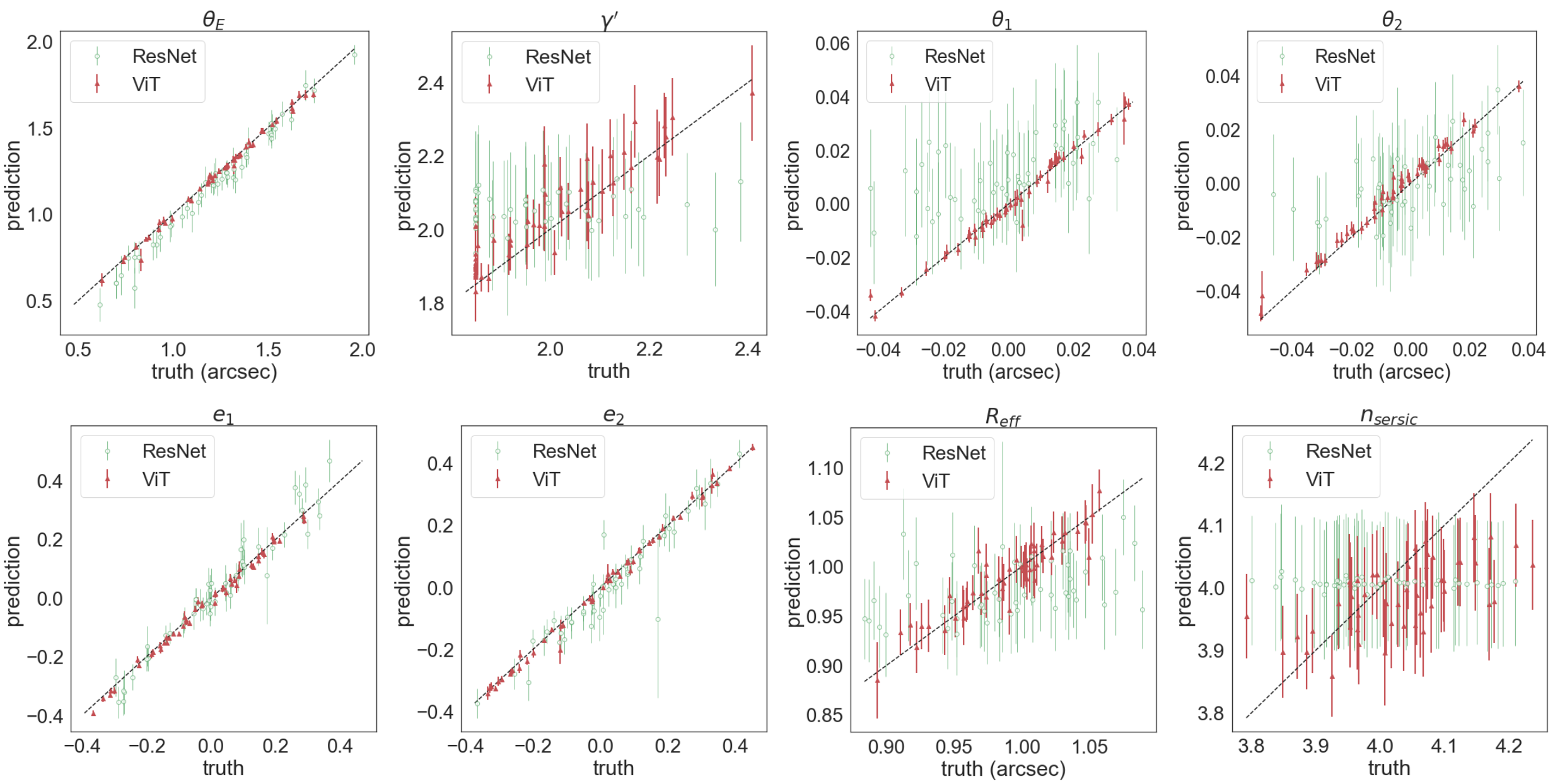
Strong Gravitational Lensing Parameter Estimation with Vision Transformer
We explore Vision Transformers (ViTs) for estimating parameters in simulated lensed quasar systems-offering a fast, competitive alternative to MCMC and CNNs. ViTs perform well on mass-related lensing parameters, showing promise for future lensing analyses.
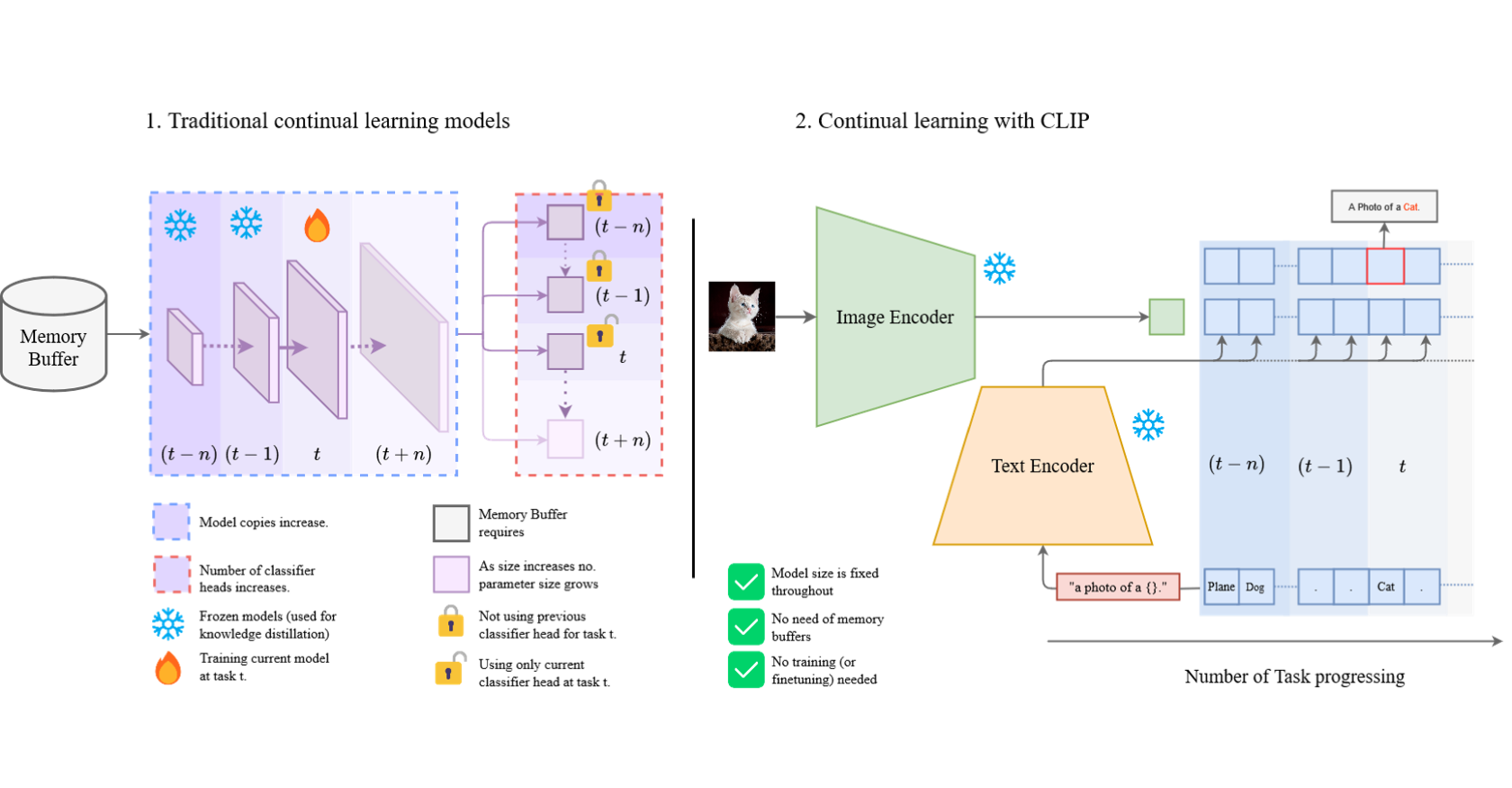
CLIP Model is an Efficient Continual Learner
This work demonstrates that a frozen CLIP model, evaluated in zero-shot mode, achieves SOTA performance across multiple continual learning settings without any fine-tuning. Tested on five benchmarks, CLIP surpasses existing methods while avoiding re-training, memory replay, or architectural tweaks, making it a strong and surprisingly simple baseline for future CL research.
Pre-prints
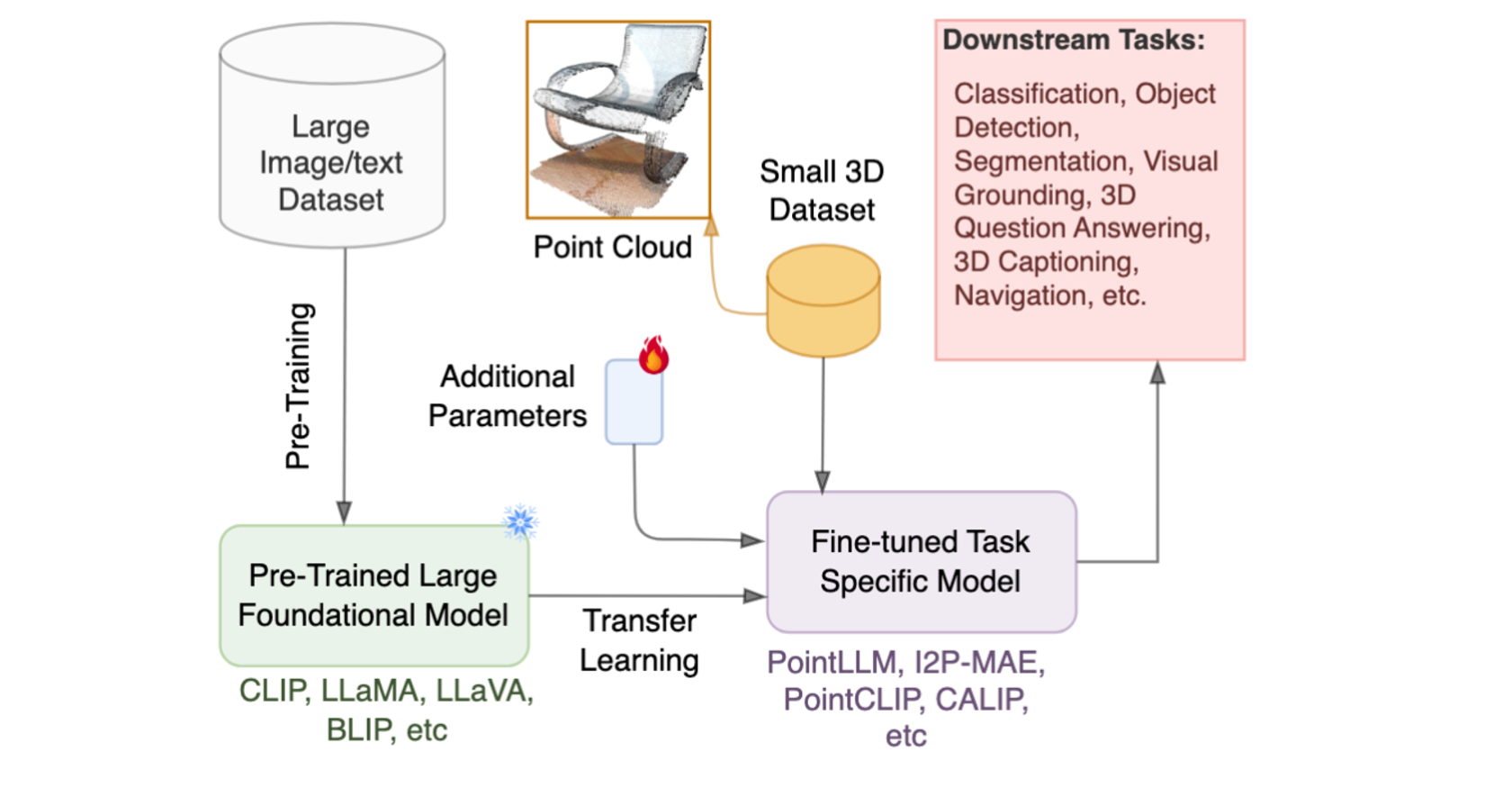
Foundational Models for 3D Point Clouds: A Survey and Outlook
This paper surveys recent advances in foundation models for 3D point cloud understanding, focusing on how 2D and language-based pretrained models help overcome challenges like limited labelled data and high computational costs. It reviews strategies for building 3D FMs, their application across core 3D tasks, and highlights future research directions.
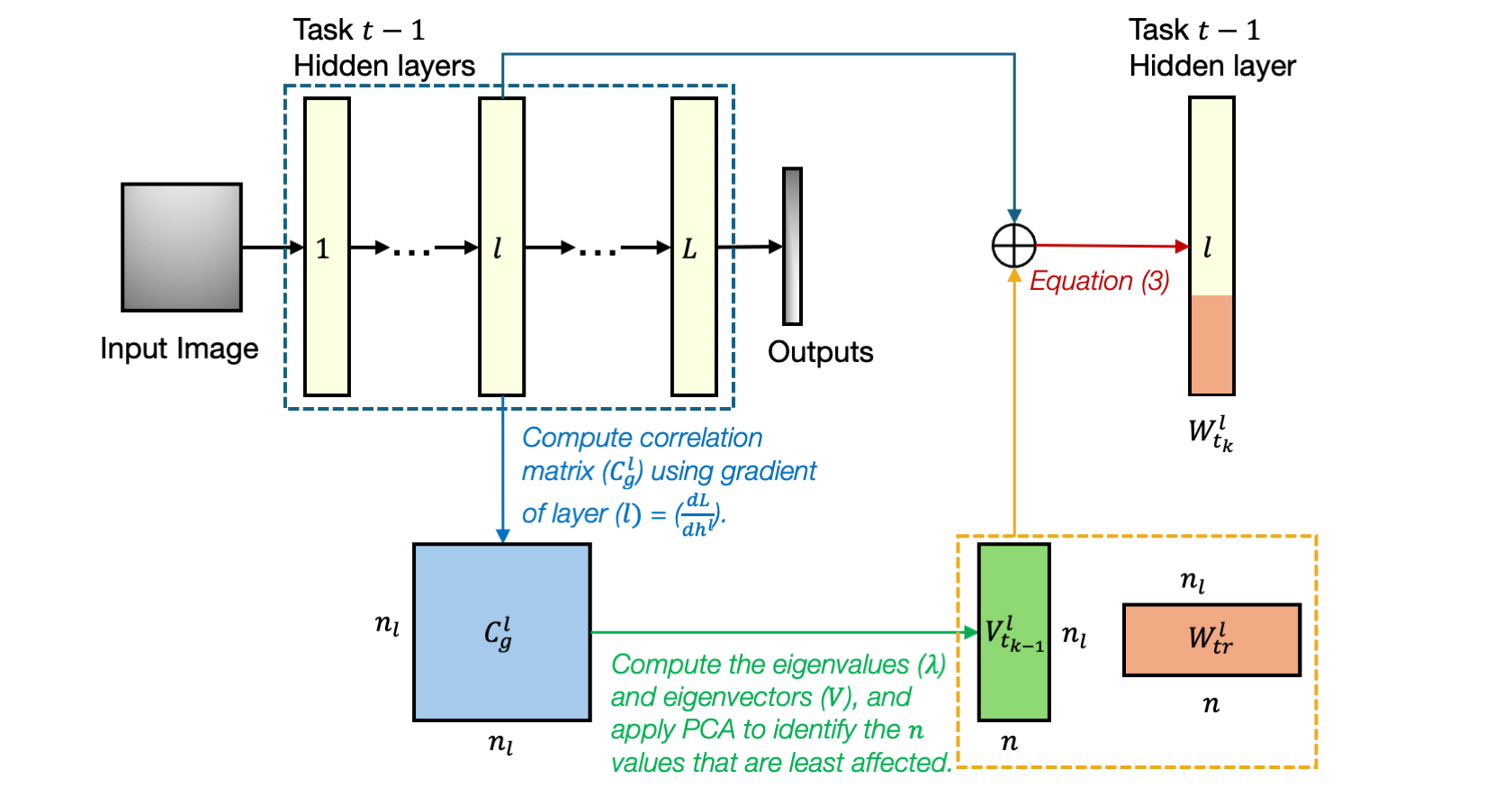
Gradient Correlation Subspace Learning against Catastrophic Forgetting
This paper proposes Gradient Correlation Subspace Learning (GCSL) to address catastrophic forgetting in incremental class learning. GCSL identifies and preserves weight subspaces least affected by prior tasks, projecting new task updates into them, and can be flexibly applied across network layers and tasks.